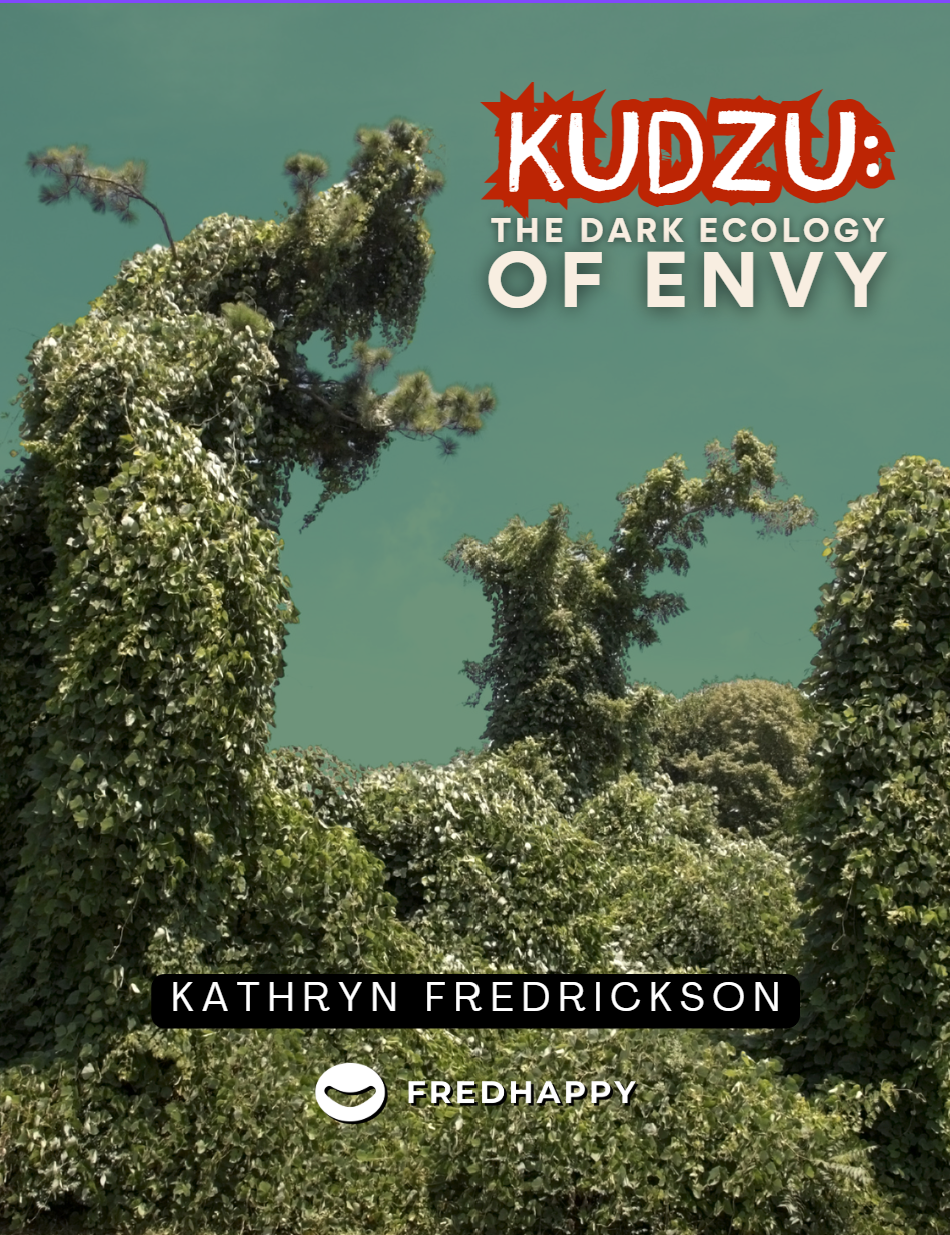
KUDZU: Dark Ecology of Envy
A living system detects superior light.
It does not hate what stands above it. It does not brood, confess, or ask permission. It senses the difference between low shadow and high light, then moves toward the solution another body has already spent years creating.
Kudzu reaches. It grips. It roots wherever contact becomes possible. Another body’s height becomes saved labor. Its strength becomes support. Its place in the light becomes a route.
At first, the hillside looks fuller. That is how the loss goes unnoticed.
KUDZU is a short work of uncanny fiction told entirely through the living logic of the vine. No narrator explains the pattern, and no human character steps forward to soften it. The reader enters the mechanism itself and follows envy as it becomes attachment, access, cover, pressure, and unchecked increase.
This is not a monster story. Kudzu does not recognize the life beneath it as an enemy. It recognizes height, structure, moisture, and opportunity. It does not need the other body gone. It needs that body working underneath it.
That is the horror.
KUDZU makes envy visible before language tidies it into jealousy, insecurity, rivalry, or resentment. It reveals a force that can distort the perceiver, diminish the target, and alter an entire field while everything still appears abundantly alive.
This is envy with no confession. This is growth with no category for enough.
KUDZU belongs to the Fredhappy uncanny fiction collection: strange, precise stories that use non-human life to reveal the hardest parts of being human. It is for readers drawn to dark ecology, literary horror, psychological pattern recognition, workplace dynamics, tall poppy syndrome, and fiction that lets a human force unfold without turning it into a lecture.
After checkout, you will immediately receive one downloadable PDF containing the complete work. You can read it on your phone, tablet, or computer, save it to your personal library, annotate it in a compatible PDF reader, or print a copy for your own use.
Read it once for the vine.
Then notice what begins growing around it.