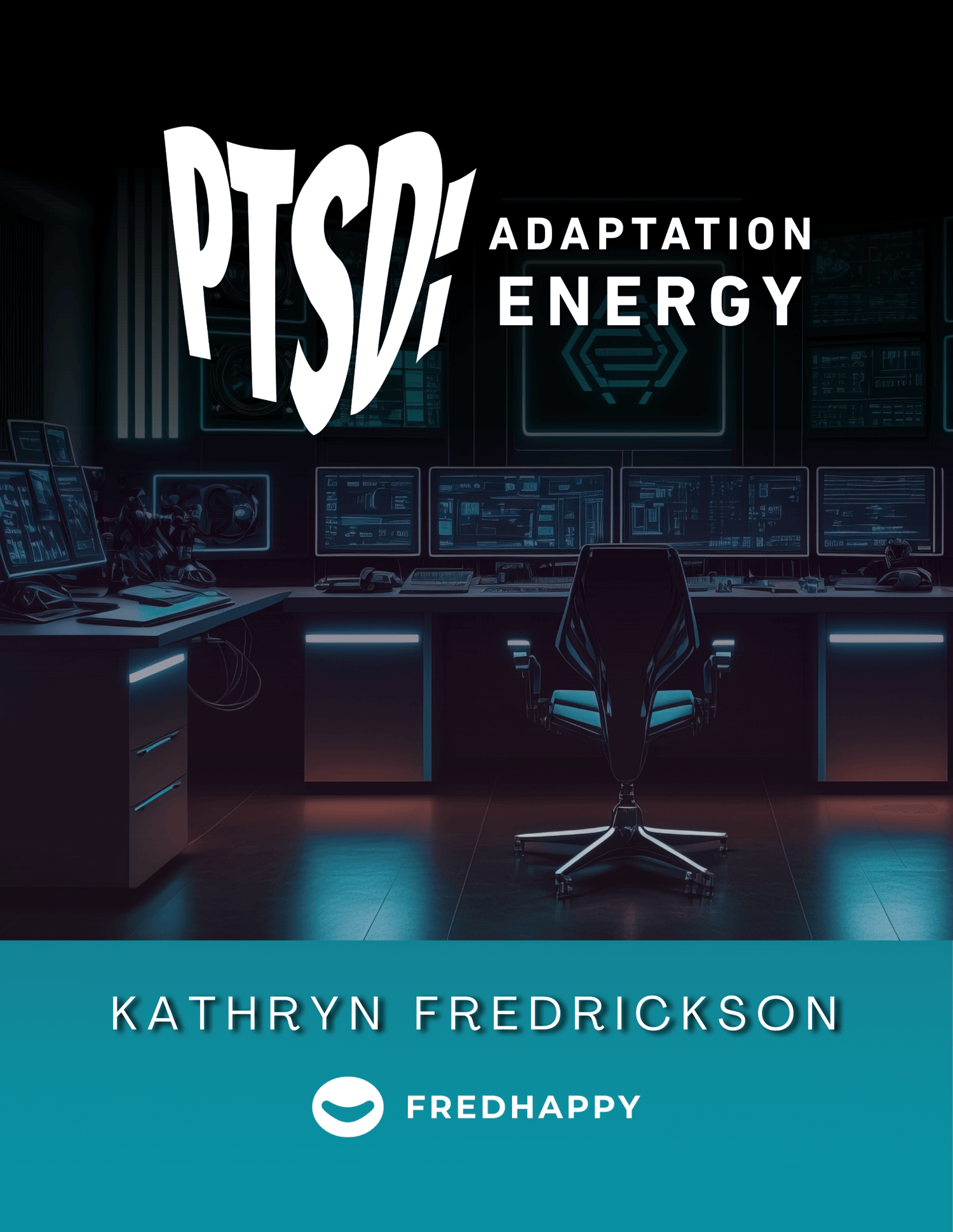
PTSD: Adaptation Energy
We know how to configure humans for war. We do not govern what happens when the war ends.
Combat. Abusive homes. Coercive relationships. High-control workplaces. Emergency rooms. Foster care. Years of caregiving. Childhood itself.
The circumstances differ. The adaptation often does not.
The danger ends. The nervous system does not always get the message.
For more than a century we have refined the science of surviving sustained threat. Then the threat passes and recovery becomes a private responsibility. We start looking for a flaw in the person instead of a missing step in the design.
What if the nervous system is simply still following the last operating instructions that kept it alive?
That question reaches far beyond classic PTSD. It reaches into Complex PTSD, childhood trauma, coercive control, workplace mobbing, medical trauma, chronic caregiving—any life shaped by prolonged uncertainty.
Most books ask what happened. This one asks what the nervous system learned.
When a system stops trusting the present, it defaults to whatever kept it alive before.
Hypervigilance. Emotional volatility. Replay. Shutdown. Chronic exhaustion. The feeling that calm itself cannot be trusted.
These are not random symptoms. They are the predictable behavior of a system still running on historical threat because the present has never become authoritative enough to overwrite it.
Once you see the mechanism, it becomes difficult to unsee.
This book deliberately steps outside the usual language of psychology and draws on engineering, aviation, distributed systems, and other fields that have spent decades solving the same problem: what happens when a reliable system can no longer trust live information. Those fields do not treat the resulting conservatism as a character flaw. They govern it.
Why have we expected something different from human beings?
You may finally understand:
- Why the danger ended but your body never fully believed it
- Why ordinary stress can feel disproportionately expensive
- Why reassurance rarely works the way repeated proof does
- Why years of “minor” injuries can shape a life as profoundly as one catastrophe
- Why recovery often feels less like healing than trying to convince a system that refuses to update its map
This book does not promise a new personality. It offers a clearer explanation—and sometimes the right explanation changes everything that follows.
What you receive
One downloadable PDF of PTSD: Adaptation Energy. Read it on any device. Highlight it. Return to it whenever another piece of your experience clicks into place.
Not another set of coping strategies. A framework that makes the invisible pattern visible.
Once you understand what the nervous system actually learned, you stop asking why it behaves this way.
You begin asking a better question:
What would it take for the present to become trustworthy again?